
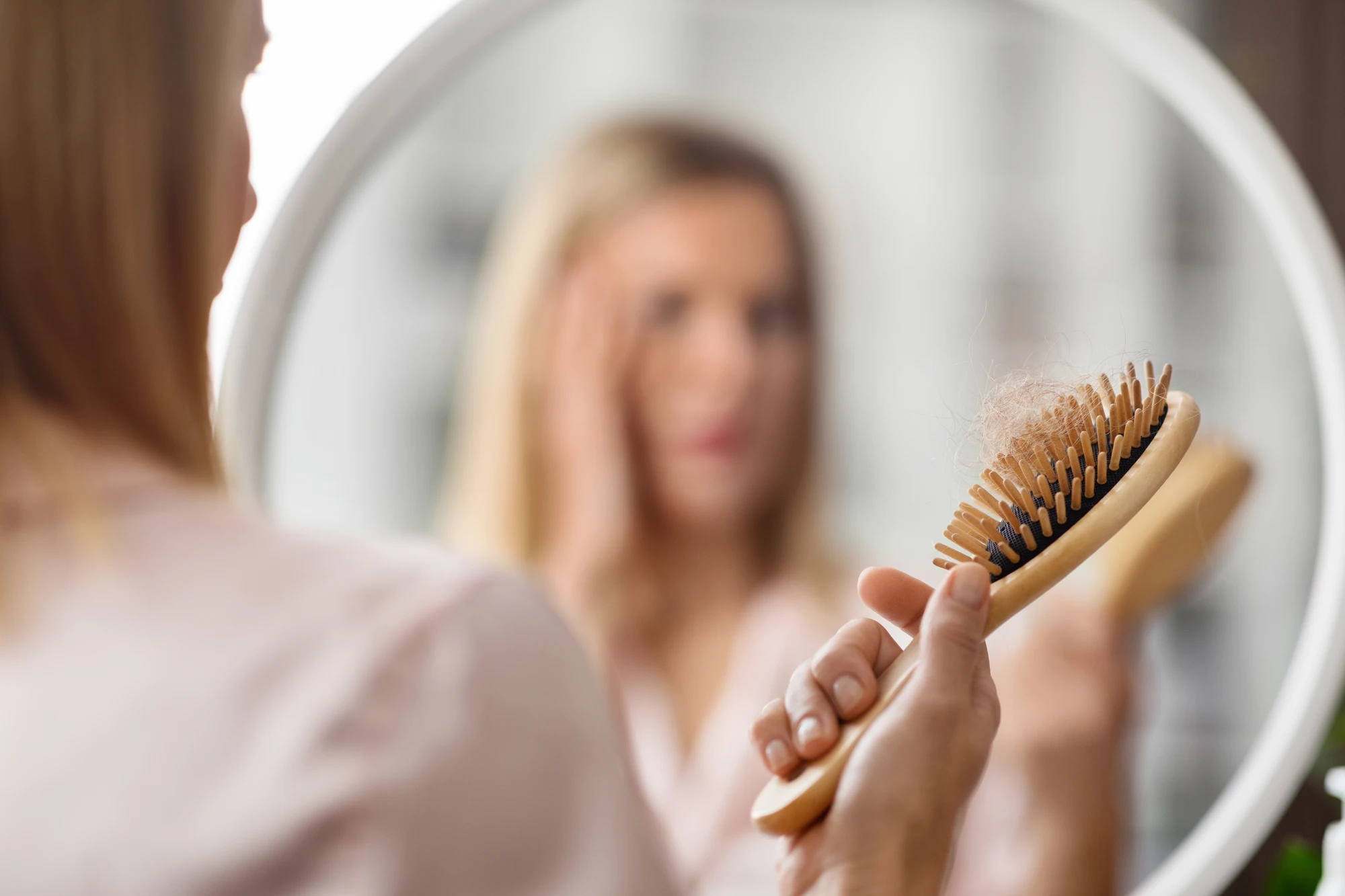
Thinning hair is one of the most quietly distressing symptoms of the menopause transition — and one of the least talked about. If you’ve noticed more strands in the shower drain, a widening part, or hair that feels finer than it used to, you’re not imagining it, and you’re not alone.
Why hair changes during this transition
Estrogen and progesterone help keep hair in its growth phase longer. As these hormones decline during perimenopause and menopause, more hair follicles shift into the resting and shedding phase at once, which shows up as:
- Overall thinning, especially at the crown and part line
- Increased shedding, more hair in your brush or drain than usual
- Slower regrowth, hair that seems to take longer to grow back
- Finer texture, strands that feel thinner or more fragile than before
At the same time, hormonal changes during this transition can shift the balance in ways that lead to a pattern of thinning at the crown and temples similar to male-pattern hair loss. This is sometimes called female pattern hair loss (FPHL).
Other contributors worth ruling out
Hormone shifts aren’t always the only factor. Your provider may also want to check for:
- Thyroid dysfunction, which can independently cause hair thinning
- Iron deficiency or anemia
- Vitamin D or B12 deficiency
- Chronic stress, which can trigger a temporary shedding pattern called telogen effluvium
This is why a proper workup matters — treating hair loss effectively starts with understanding which factors are actually driving it in your case.
What can help
Medical options
- Topical minoxidil, an FDA-approved treatment for pattern hair loss, is often a first-line option
- Hormone therapy may help some women, particularly when hair thinning is clearly tied to the broader hormone shifts of perimenopause or menopause
- Addressing any underlying nutritional or thyroid issues identified in bloodwork
Supportive habits
- Gentle hair care — minimizing heat styling and tight hairstyles
- A protein- and nutrient-adequate diet
- Scalp-focused care to support a healthy growth environment
Don’t wait to ask about it
Hair thinning tends to progress gradually, and earlier intervention generally gets better results than waiting. It’s also a completely legitimate thing to bring up at a menopause visit — you don’t need to feel like it’s too minor to mention.
If you’ve noticed changes in your hair alongside other shifts in your cycle, sleep, or mood, it may all be connected. A virtual visit with Midlife Wellness can help identify what’s driving it and build a plan that actually targets the cause.